Big Buddha Statues in Hua Hin
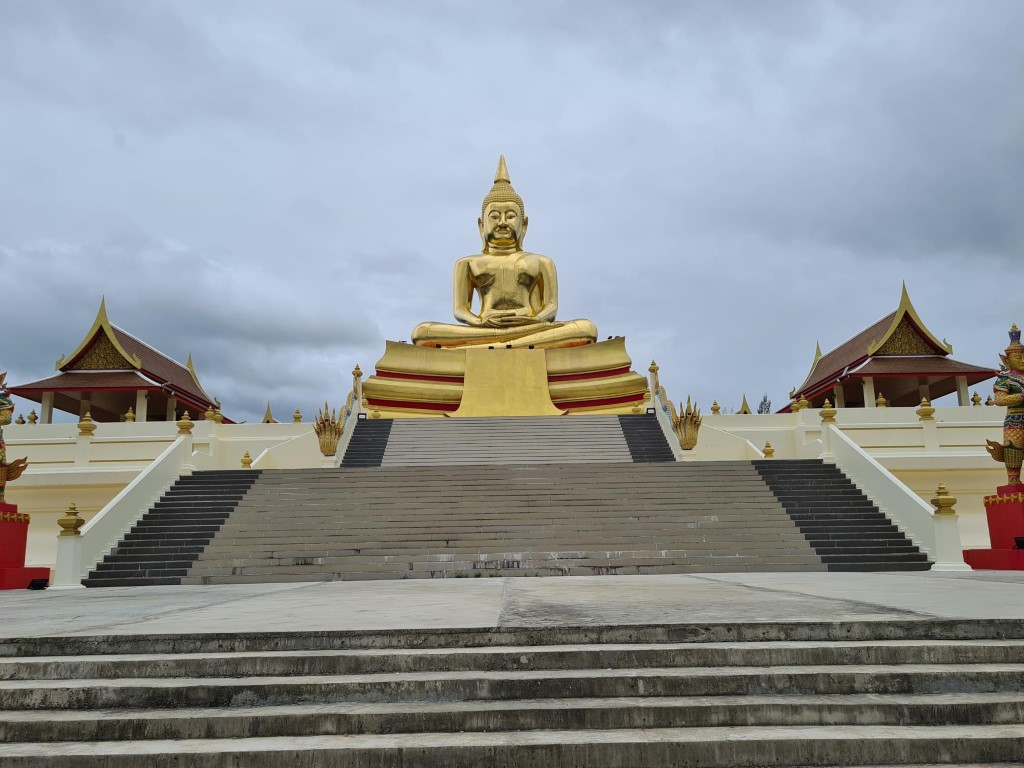
Discovering the Big Buddha Statues of Hua Hin: Spiritual Landmarks & Panoramic Views
Hua Hin, Thailand’s elegant royal beach resort, blends serene coastal vibes with rich Buddhist heritage. While not as famous for giant statues as places like Phuket or Ang Thong, the town and its outskirts feature several impressive Big Buddha images—standing guardians overlooking the sea, hills, and rural fields. These sites offer peace, stunning views, and a glimpse into local devotion. Most are free to visit (donations appreciated), and they’re accessible by tuk-tuk, taxi, or rented scooter/motorbike.
Here are three standout Big Buddha spots in and around Hua Hin, from the famous coastal icon to lesser-known rural gems.
1. The Biggest (and Least-Crowded) Buddha: วังมัจฉา (Wang Matcha) – Fish Palace Monastery
Tucked in rural fields just a short drive from the popular Wat Huay Mongkol (famous for its massive Luang Phor Thuad monk statue), you’ll find Hua Hin’s largest Buddha statue at วังมัจฉา monastery—translating to “Fish Palace” or “Palace of the Fish” in English.
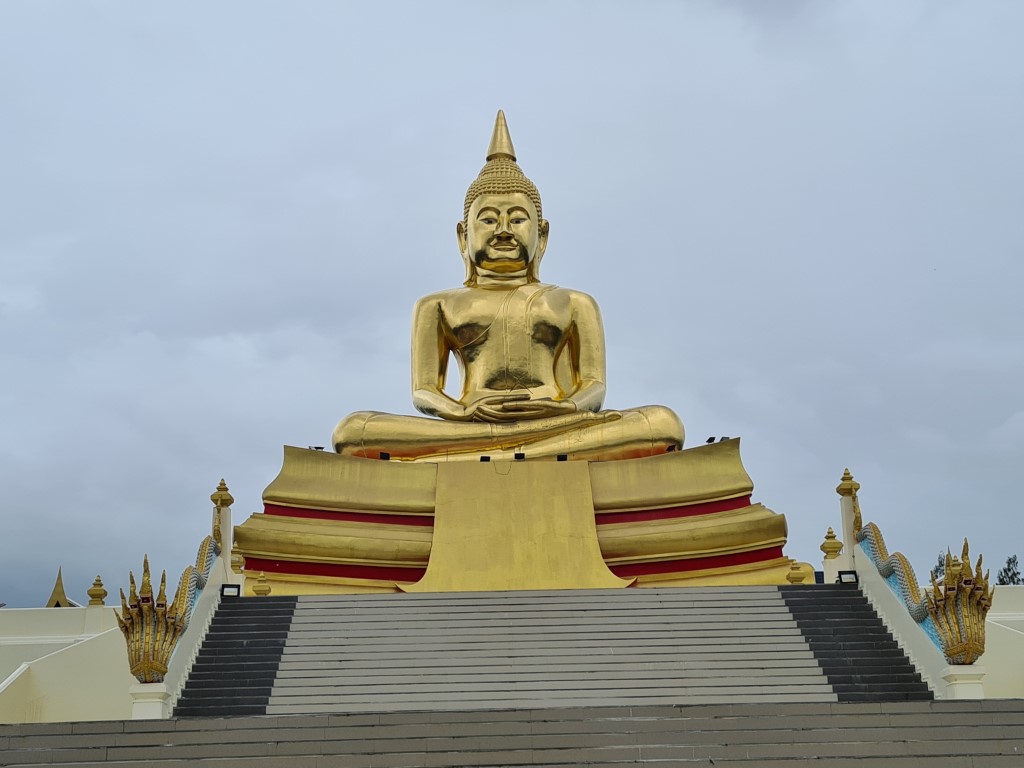
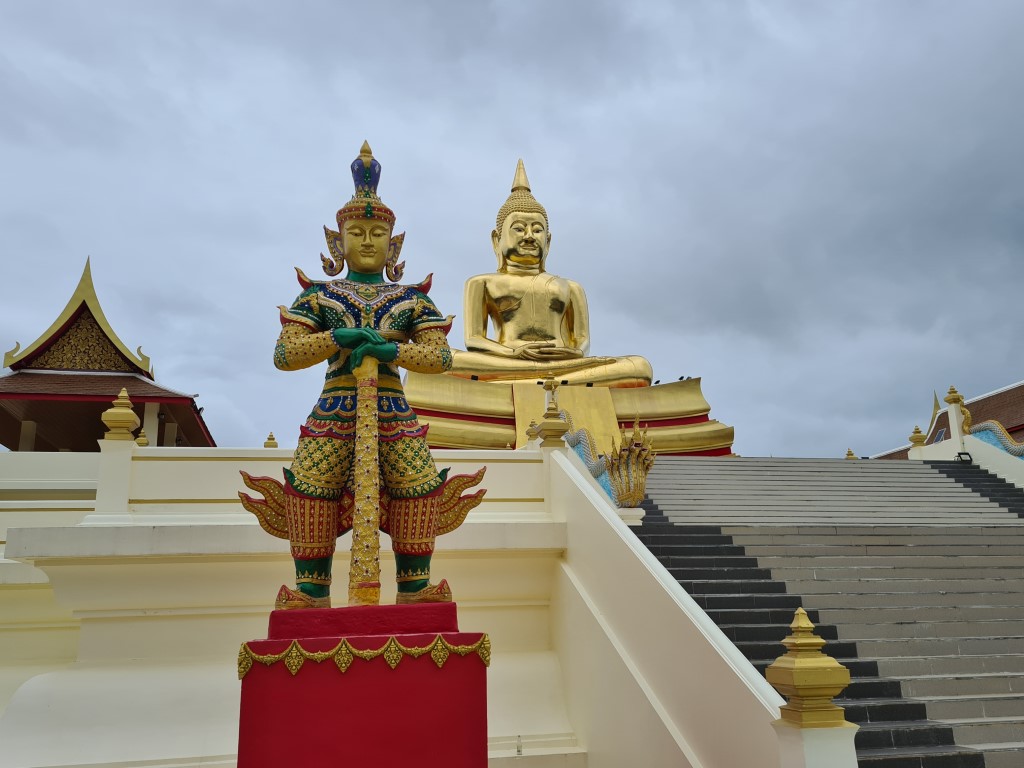
วังมัจฉา is a peaceful Buddhist complex centered around a large fish sanctuary (often with thousands of protected freshwater fish in ponds or reservoirs), making it a serene spot for reflection and feeding the fish. The Big Buddha here is a towering seated or standing figure (details vary in reports, but it’s notably larger than many local ones). Construction on this prominent statue wrapped up relatively recently, around 2023, explaining why it’s still under-the-radar—hardly anyone ventures the extra few minutes beyond Wat Huay Mongkol’s bus-tour crowds.
You’ll likely have the expansive grounds mostly to yourself: quiet paths, open fields, and a profound sense of solitude amid nature. From central Hua Hin, it’s a fair trek—over 25 km west into rural countryside—so plan for 30–40 minutes by tuk-tuk (I hired one for the round trip, and it took about 40 minutes each way). No entrance fee; just respect the sacred space (dress modestly, remove shoes in temple areas).This hidden gem rewards those willing to go off the beaten path—perfect for a peaceful escape from Hua Hin’s beaches.
2. The Most Famous: Standing Buddha at Wat Khao Takiab (Monkey Mountain)
Perched at the base of Khao Takiab (“Chopstick Hill”)—the dramatic headland marking the southern end of Hua Hin Beach—stands the town’s most iconic Big Buddha. This large golden standing Buddha gazes serenely out over the Gulf of Thailand, palms outward in a gesture said to “calm the ocean.”The statue rises about 20 meters (65–66 feet) tall—roughly the height of a six-story building—and serves as the main landmark for Wat Khao Takiab, a Thai-Chinese Buddhist temple complex. The temple’s history ties into Hua Hin’s growth as a royal seaside retreat in the early 20th century, with the hilltop site developing over decades into a spiritual haven.
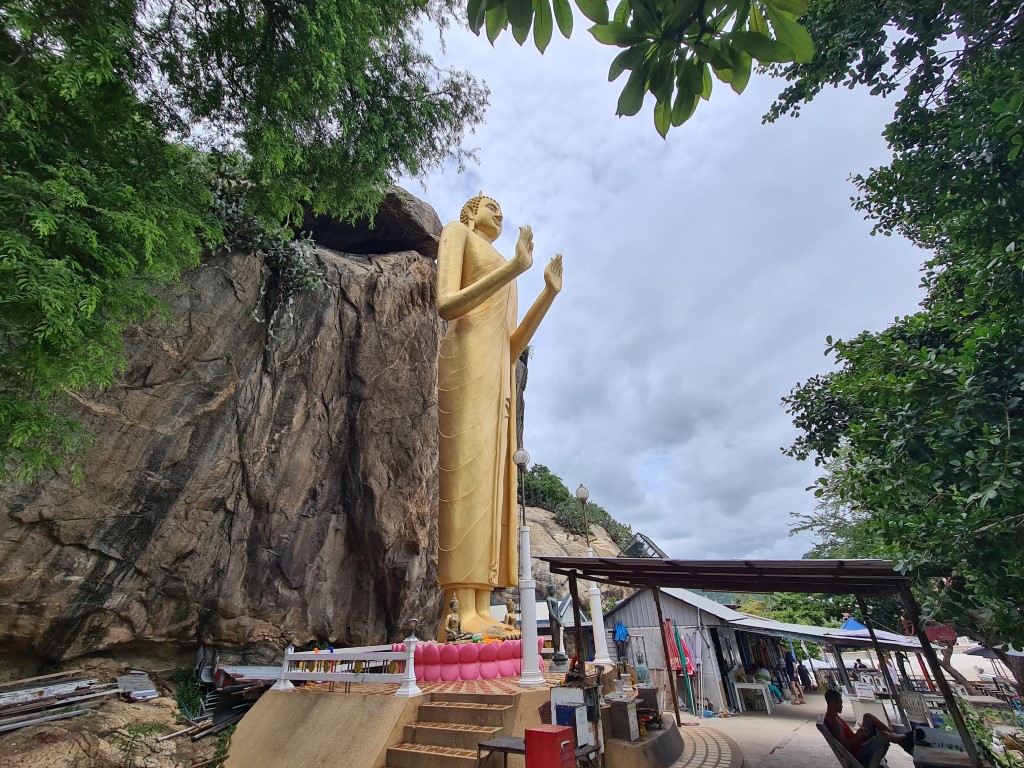
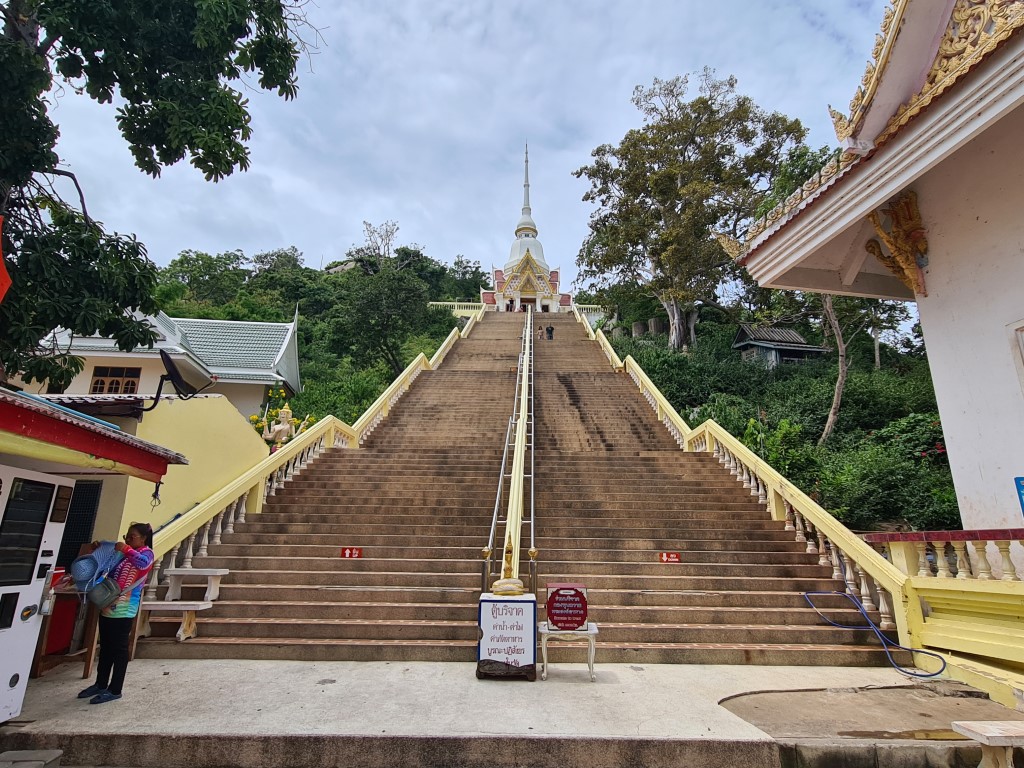
Beyond the Big Buddha at the base, climb the steps (or take the road) to the summit for panoramic views of Hua Hin coastline, beaches, and distant hills. The grounds feature:
- Multiple pagodas and shrines in ornate Thai-Chinese style (blue, red, and gold decorations).
- A sacred white chedi housing relics.
- Statues of Guanyin (the Goddess of Mercy) with thousand arms, Pu Tai (Laughing Buddha), and other deities.
- Seaside caves and viewpoints.
- A large population of wild monkeys—hence the “Monkey Mountain” nickname (watch your belongings!).
It’s tourist-friendly yet retains spiritual energy, with bells to ring for blessings. Easily reached (about 7 km south of central Hua Hin), it’s a must-visit for sunrise/sunset views or a quick spiritual stop.
3. The Hilltop Guardian: Standing Buddha at Wat Khao Noi
North of Hua Hin, in the hills along Canal Road, Wat Khao Noi offers one of the most rewarding viewpoints in the area—crowned by a massive standing Buddha overlooking the town, Khlong Road, and even Klai Kangwon Palace.The standing Buddha (depicting an arhat or disciple in walking pose, with an umbrella over one shoulder and staff in hand) towers at about 21 meters tall, built around 2014 alongside temple expansions. From afar, it appears to “watch over” Hua Hin, symbolizing protection and guidance.
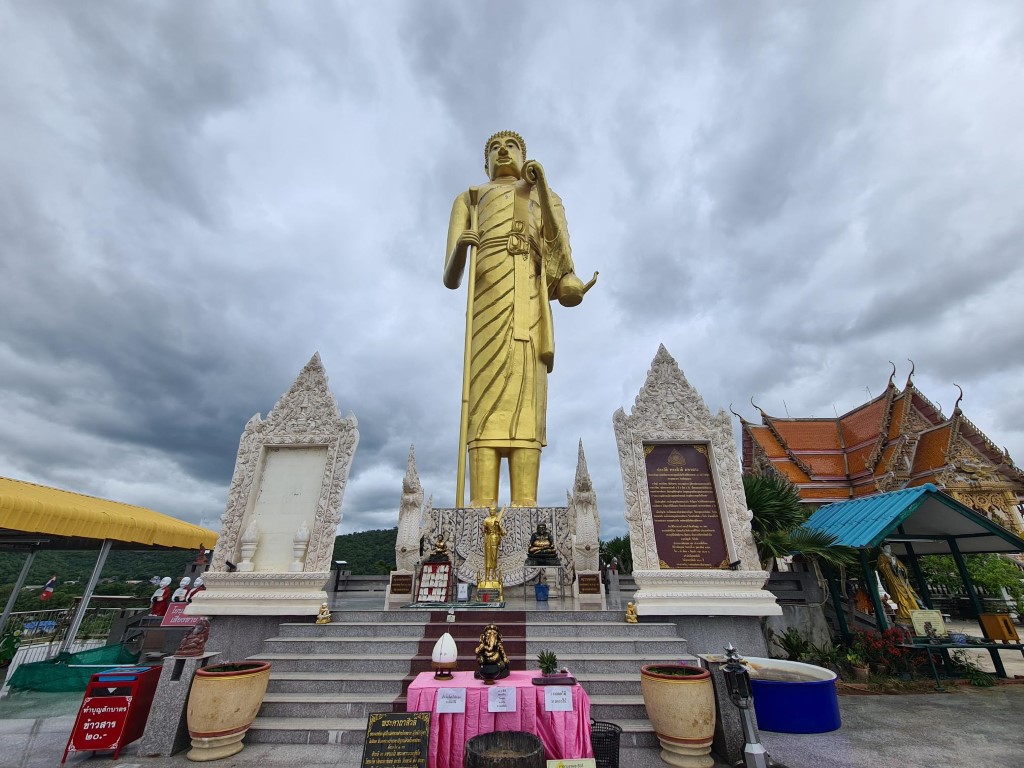
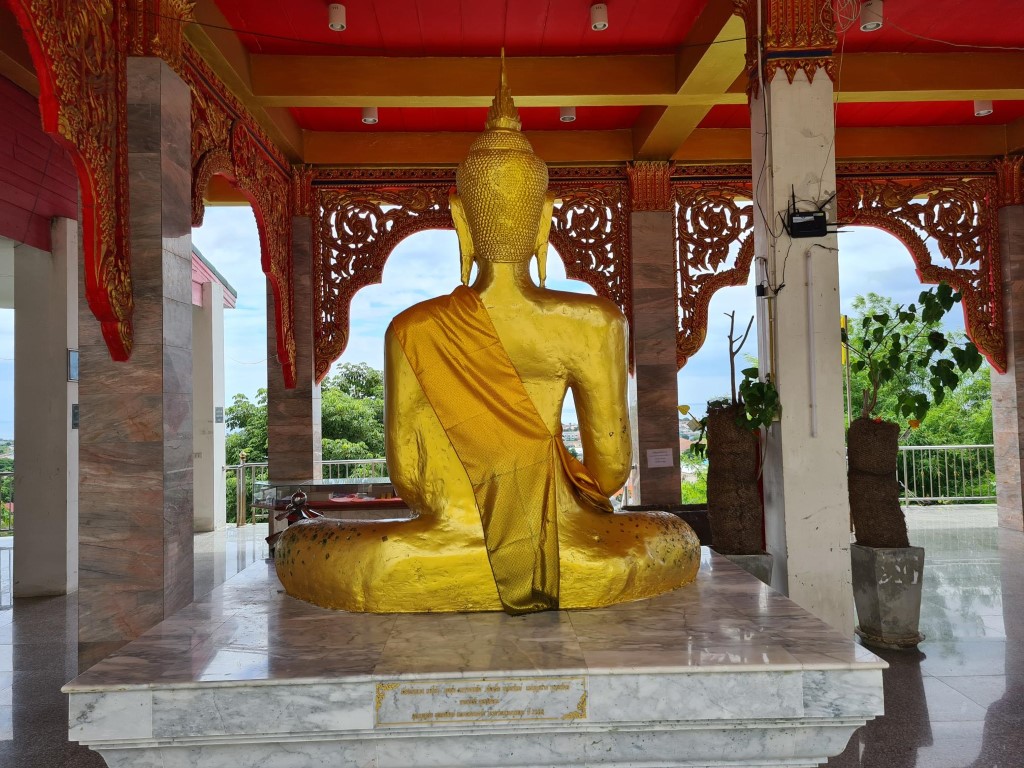
The temple itself is a peaceful hilltop sanctuary with 360-degree views—stunning over the city, sea, and countryside. History is modest but meaningful: developed as a local worship site with modern additions to inspire devotion and provide a serene escape. It’s less crowded than Khao Takiab, offering quiet reflection amid beautiful grounds.Access involves a climb (steps or road), but the panorama makes it worthwhile—especially at sunrise or late afternoon.
Tips for Exploring Hua Hin’s Big Buddhas
- Best Time: Early morning or late afternoon to avoid heat and crowds; sunsets from hilltop sites are magical.
- Getting There: Tuk-tuks/taxis for rural spots (negotiate round-trip); songthaews or scooters for closer ones.
- Respect: Dress modestly (cover shoulders/knees), remove shoes indoors, and be mindful of monkeys at Khao Takiab.
- Combine Visits: Pair Wat Khao Takiab with nearby beaches, or Wat Huay Mongkol + Wang Matcha for a full rural day trip.
- Beyond the Statues: Hua Hin’s temples often include fish feeding, meditation, or panoramic lookouts—perfect for blending spirituality with scenic relaxation.
These Big Buddhas capture Hua Hin’s blend of tranquility, history, and natural beauty—whether you’re seeking solitude, iconic views, or quiet contemplation.
Also check out these highlights near Hua Hin:

Australian travel blogger and aviation enthusiast based in Sydney, living a relaxed retired life filled with daily flat whites. Passionate about exploring The World's hidden gems TripAtrek travel blog is on a mission: To share these gems with you.