Wildlife
Wildlife

February 4, 2026Just 5 km outside Hua Hin town centre lies Elephant Village, a modest elephant sanctuary that offers a quieter, more intimate experience with rescued elephants compared to the larger camps further afield. This refuge is home to four elephants — all former working animals rescued from neglect, circuses, or logging — and provides a glimpse into elephant care in Thailand.
How to Get There
A tuk-tuk from central Hua Hin takes less than 15 minutes and costs around 150–250 THB round-trip (negotiate upfront). It’s an easy half-day trip, especially if you combine it with nearby attractions.What to Expect at Elephant VillageThere is no entrance fee to enter the grounds — the sanctuary relies on donations and paid activities to cover food, vet care, and upkeep.Main ways to interact:
Elephant rides: 800 THB for 20 minutes (saddle ride around the grounds).
Feeding: Buy a basket of cucumbers or bananas for 100 THB and hand-feed the elephants directly.
Feeding time at Elephant Village Hua Hin, Thailand
Hand feeding Elephant at the Elephant Village Hua Hin
The elephants wear chains around their legs — explained by staff as a safety measure to prevent accidents with visitors. The space is small, and the animals spend time in a shaded area with dirt ground and a water trough. You can observe them up close, take photos, and feed them, but there are no long nature walks or jungle bathing experiences here.
The Ethical Debate
Elephant rides are controversial. Many animal welfare organizations (including World Animal Protection and Elephant Nature Park) strongly oppose riding, citing potential harm to the elephants’ backs and spirits from training methods (phajaan). Supporters of places like Elephant Village argue the rides fund care and provide a better life than the elephants had previously.
If you choose not to ride, feeding and observing are still options — and your 100 THB basket directly supports the sanctuary’s operating costs.
Elephant Village Hya Hin Thaialnd
Nearby Attractions
Elephant Village is conveniently located near several worthwhile stops:
Wat Khao Noi (5–10 min drive): Hilltop temple with one of Hua Hin’s largest standing Buddha statues (21 m tall) and panoramic views over the coastline and town. Free entry; a short climb rewarded with stunning scenery.
Ethical Elephant Camp (5 min drive): A no-ride, no-chain sanctuary focused on observation and ethical interaction.
Hutsadin Elephant Foundation (10–15 min drive): Another ethical sanctuary emphasizing rescue, rehabilitation, and no riding or bathing.
Hua Hin Hills Vineyard (15–20 min drive): Scenic winery with tastings and views.
Cicada Market (back in Hua Hin town, 10–15 min): Weekend night market with art, food, and live music.
Practical Tips for Visiting Elephant Village
Best time: Morning or late afternoon — cooler and fewer people.
Cost: Feeding 100 THB; rides 800 THB. Cash preferred.
Dress: Comfortable clothes and closed shoes (dusty ground).
Respect: No touching trunks without permission; follow staff guidance.
Combine visits: Pair with Wat Khao Noi for a half-day of culture, nature, and elephant observation.
Elephant Village isn’t the most luxurious or fully ethical sanctuary in Thailand, but it’s a small, accessible option for travelers in Hua Hin who want to see rescued elephants up close and support a local refuge. If you’re looking for no-contact, no-ride experiences, head to Ethical Elephant Camp or Hutsadin instead.
Either way, a visit here — combined with the nearby giant Buddha and coastal views — makes for a meaningful and scenic half-day trip from Hua Hin.
Check out the location of the Elephant Village in Hua Hin [...]
Read more...

February 2, 2026If you’re a scuba diver or aquarium lover like me, few experiences beat seeing massive marine life up close. Kagoshima City Aquarium (also called Io World Kagoshima Suizokukan) is one of Japan’s standout spots, and it completely exceeded my expectations. Located right on Kinko Bay with epic views of active Sakurajima volcano across the water, this aquarium delivers on both wildlife and scenery.
The highlight? A live whale shark gliding through the massive Kuroshio Great Tank. I’ve chased them in the wild (missed them by a day in Koh Chang, Thailand, multiple times), so seeing my first one—even in captivity—was magical. The gentle giant is a juvenile named Yuyu, still growing but already huge compared to the people at the viewing windows. Watching it swim slowly through the 25m-long, 13m-wide, 5m-deep tank with tuna, bonito, and rays is mesmerizing—it’s one of only a few aquariums in Japan where you can see a whale shark on display.
The aquarium’s focus on the Kuroshio Current (the “Black Current” that brings tropical species north) makes every exhibit feel authentic to Kagoshima’s marine world. Here’s what makes it worth the visit.
Juvenile whale shark Yuyu at Kagoshima City Aquarium, Japan
The enormous Kuroshio Great Tank at Kagoshima City Aquarium
The Whale Shark & Kuroshio Great Tank
The Kuroshio Great Tank is the star attraction. This enormous exhibit recreates the powerful current that flows past Kagoshima, carrying whale sharks, tuna, bonito, and more. Yuyu the whale shark is the centerpiece—graceful, filter-feeding, and surprisingly peaceful despite its size. Feeding times (every few hours) are especially impressive, with staff tossing food as the shark glides by.
It’s not the largest tank in the world, but the viewing angles (including underwater tunnels and large windows) let you get remarkably close. For divers, it’s the next best thing to a wild encounter—peaceful, awe-inspiring, and educational.
Dolphin Show & Indo-Pacific Bottlenose Dolphins
Just to the left as you enter, the outdoor Dolphin Pool hosts lively shows several times a day (check the schedule on arrival). The stars are Indo-Pacific bottlenose dolphins—the same species that frequent Kagoshima Bay at certain times of the year. The 20-minute performances mix acrobatics, jumps, and tricks with educational commentary (unfortunately in Japanese only, so non-speakers miss the biology facts about dolphins vs. fish/humans).
Even without understanding the narration, the energy is infectious—dolphins leaping high, splashing the audience, and interacting with trainers. It’s a fun, family-friendly highlight.
The dolphin show at Kagoshima City Aquarium, Japan – three Indo-Pacific bottlenose dolphins soaring through the air
Close-up of the impressive spotted moray eel (honeycomb moray) at Kagoshima City Aquarium
Other Must-See Exhibits
Beyond the big stars:
Spotted Eagle Rays & Sharks: In the main tank, graceful spotted eagle rays glide alongside sharks—beautiful to watch from multiple angles.
Giant Moray Eel: A highlight for me—one massive eel tucked in a coral crevice, staring out with its signature menacing grin. Awesome close-up views.
Coral Reefs & Tropical Fish: Smaller tanks throughout showcase vibrant coral environments with clownfish, angelfish, and other colorful species.
Jellyfish & Deep-Sea Creatures: Ethereal jellyfish displays and bizarre deep-sea life add variety.
Sakurajima View: Head to the top level for a large window overlooking Kinko Bay and Sakurajima volcano—active eruptions sometimes visible, making the aquarium feel connected to the region’s dramatic nature.
Elegant spotted eagle ray glides through the massive Kuroshio Great Tank
Stunning coral ecosystem exhibit at Kagoshima City Aquarium
Practical Info: Entrance Fees, Hours & Access (2026)
Entrance Fee: Adults ¥1,500 (high school+), Children ¥750 (elementary/junior high), Infants ¥350 (4+ years), Under 4 free. Groups (20+) get discounts.
Hours: 9:30 AM–6:00 PM daily (last admission 5:00 PM). Nighttime events occasionally extend hours.
Location: Right by Kagoshima Port, next to the Sakurajima Ferry Terminal—easy to combine with a ferry trip to Sakurajima volcano.
Getting There: From Kagoshima Chuo Station: City tram to Suizokukanguchi stop (8-min walk), or City View Bus to Kagoshimasuizokukanmae stop.
Dramatic view of Sakurajima volcano during a small eruption as seen from Kagoshima City Aquarium
Why Kagoshima City Aquarium Stands Out
I’ve been disappointed by many aquariums—small tanks, repetitive exhibits, or lackluster animals. Kagoshima bucks that trend with its focus on local Kuroshio species, the rare whale shark, engaging dolphin shows, and that unbeatable Sakurajima backdrop. It’s educational (Kuroshio Current info, local marine life), visually stunning, and genuinely exciting for divers or anyone who loves the ocean.
If you’re in Kagoshima, don’t skip it! Seeing a whale shark up close is a bucket-list moment, even behind glass. Pair it with a Sakurajima ferry ride for the perfect day. Highly recommended!
Kagoshima City AquariumOpen 9:30 a.m. to 6:00 p.m 7 days a week [...]
Read more...

December 22, 2024I have never met a scuba diver who didn’t like nudibranchs! These colourful, wriggly creatures are part of the Nudibranchia family, a soft-bodied, marine gastropod mollusks which do not have shells. I had a friend describe them as flowers of the sea (though they are animals, not plants!) as they come in all sorts of bright colours. Another friend described them as Pokemon of the Sas there are so many different types.
In fact, there are over 2,300 different types of Nudibranch. Most live in warm tropical waters, close to the equator, though some species can be found in cooler waters, even as far south as Sydney in Australia.
I have done scuba diving all over Indonesia, Malaysia and Thailand and always see nudibranch each time I go diving. You see some very common nudibranch in most tropical areas, like the Pimpled Phyllidiella Nudibranch or the Sky Blue Phullidia Dorid Nudibranch (both pictured below), though every now and then you see a very unique and elobarate nudibranch.
Pimpled Phyllidiella Nudibranch
Sky Blue Phyllidia Dorid Nudibranch
One of the prettiest nudibranchs I have seen recently off the Gili Islands Lombok is the Dark Margin Glossodoris Nudibranch. I saw this one swimming, almost flying through the water as it flapped itself through the water.
Dark Margin Glossodoris Nudibranch
Here are some more pics of the different Nudibranch:
Swollen Phyllidia Dorid Nudibranch
Anna’s Chromodoris Nudibranch
Bloomy Tambja Norid Nudibranch
Dark Margin Glossodoris Nudibranch
Shireen’s Phyllidiopsis Dorid Nudibranch
Desirable Flabellina Aeolid Nudibranch
Eel Bornella Dendronotid Nudibranch
Many-Lined Chromodoris Dorid Nudibranch
Pimpled Nudibranch
Unidentified Nudibranch
If anyone can help identify this last Nudibranch it would be great appreciated. Leave a comment below or send an email from the contact us link. [...]
Read more...
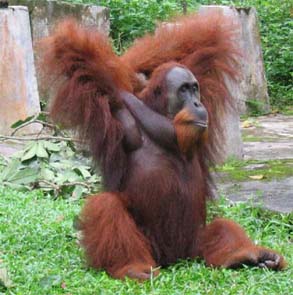
November 27, 2024Orangutans are my favourite animal. They are so much like people it is uncanny. Orangutans have 97% of the same DNA as humans so are some of our closest living relatives. The word orangutan comes from 2 Malay / Indonesian words Orang meaning people and Hutan meaning forest. So Orangutan means Forest People.
There are only 2 places in world where Orangutans are still living in the wild and that is on the island of Borneo (shared with Malaysia and Indonesia) and in Sumatra Indonesia. It is believe that there is only 40,000 orangutans left living in these 2 places, down from 60,000 10 years ago. It is expected that if the deforestation continues that the Orangutan could be extinct in the wild within 20 years.
Orangutan in North Sumatra Indonesia
So what are the best places to see Orangutan. There are a few places in Borneo which are easy to reach from Singapore or mainland Malaysia though you expect that there are heaps of crowds visiting the wildlife sanctuarys in Borneo. In my opionion the best place to see Orangutan is in Sumatra Indonesia. So lets start with the places in Sumatra where you can see Orangutan and then further down I’ll list the places in Sabah and Sarawak East Malaysia Borneo.
Orangutan in Sumatra Indonesia
There are a few places you can go to see the Orangutan in Sumatra Indonesia. In North Sumatra there are a few small villages bordering on the Gunung Leuser National Park which stretches from North Sumatra, a few hours drive from Medan, up to the province of Aceh in the northern tip of Sumatra.
The easiest village to reach from Medan is Bukit Lawang which takes around 2.5 hours by car from Medan. Bukit Lawang had one of the first Orangutan rehabilitation centres where they took Orangutans who had been people’s pets and reintroduced them into the wild by teaching them how to find their own food and build there nest to sleep at night in the trees.
Orangutan at Bukit Lawang North Sumatra
The rehabilitation has now closed down as the jungle of Gunung Leuser National Park is saturated with Orangutan and it would be dangerous to the current population to continue to reintroduce more Orangutan. What used to be the rehabilitation centre is now called the Orangutan Centre and you can still visit here and see the orangutan up close. Every morning and afternoon the park rangers go around 20 minutes walk into the jungle and take food like bananas and different types of fruit and vegetables to give to any of the reintroduced Orangutan. A few years ago 6 or 8 Orangutan would come to the feeding platform each day to get their free feed. Nowadays maybe around 2 – 3 come which is a good sign that the Orangutan are finding their own food and they have no need to come back. At this feeding platform around 20 – 30 tourists come to see the Orangutan. This is way less than the 100 – 200 people who visit the same sort of places in Borneo.
There are plenty of guys in the village of Bukit Lawang who are trained jungle trekking guides who can take you trekking in the National Park. You can go for short treks or go and stay over night in the jungle. This is your best chance to see some of the wild orangutans with the crowd of people around. There are plenty of other wildlife to see in Gunung Leuser National Park including Gibbons, Thomas Leaf Monkeys and Macque Monkeys. There are wild elephants and Sumatran tigers as well through you would have to trek 3 – 4 days into the jungle and even then yuor chances of seeing these is very slim.
Bukit Lawang Village North Sumatra
Another village around 2.5 hours drive from Bukit Lawang, or 4.5 – 5 hours drive from Medan is Tangkahan. They do not have a feeding platform at Tangkahan though you can go for jungle treks for your chance to see real wild orangutan (not reintroduced into the jungle). Tangkahan is also famous for their troup of Elephants which is used to patrol the jungle. See the article on this site about Bukit LawangElephants in Tangkahan. Or read more about Bukit LawangTangkahan North Sumatra including how to get there.
Tangkahan Sumatra Indonesia
There is one more village worth mentioning here where you can see Orangutan in North Sumatra and that is Ketembe close to Kutacane. Ketembe is a very remote village located right on the other side of Gunung Leuser National Park. From Medan it takes around 7.5 hours to drive to Ketembe. As it is more remote, here you will only find wild Orangutan. There are a few guesthouses in Ketembe to stay in and there are treking guides who can take you into the jungle for short treks or overnight camping trips. Check out more information about Ketembe.
Orangutan in Borneo
Borneo is the 3rd largest island in the world.The island is divided with the northern section belonging to Malaysia. There are 2 Malaysian states in Borneo – Sarawak and Sabah in the very north. The southern part of Borneo is owned by Indonesia and is called Kalimantan. Most of Borneo has lush jungle rainforest and you will find orangutan in all these areas, Kalimantan, Sabah and Sawarak.
Orangutan in Sabah East Malaysia Borneo
Sabah in the north of Borneo has a few wildlife sanctuaries where you can visit and see the Orangutan up close. The capital of Sabah is Kota Kinabalu which you can fly direct from Kuala Lumpur or Singapore. You then need to change planes and go to the eastern side of Borneo to Sandakan Airport. Or you can take a bus from Kota Kinabalu to Sandakan which takes around 5 hours. From Sandakan it is around 1 hours drive to the Sepilok Orangutan Rehabilition Centre which has a wildlife sanctury where you can see the Orangutan being feed each day. There are package tours that do day trips from Singapore so expect huge crowds to be there during the feeding time. The time I went there must about been over 200 people.
Orangutan Sepilok Rehabilitation Centre
Crowds at Sepilok Orangutan Rehabilition Centre
See more pics and read more on how to get to Sepilok Orangutan Rehabilition Centre.
Also see more about Kota Kinabalu.
Orangutan in Sarawak East Malaysia Borneo
The capital city of Sarawak East Malaysia is Kuching which you can fly to direct from Singapore, Kuala Lumpur or from Kota Kinabalu. Around 1.5 hours drive from Kuching is the Semonggoh Wildlife Park which is a small animal sanctuary which has some orangutan there. Again you have quite large crowds visiting the wildlife park each day. The Semonggoh is set in a nice natural environment and you get good views of the Orangutan climbing down from the trees on ropes to get their daily feed. Read more about Kuching.
Orangutan at Semenggoh Wildlife Centre Sarawak
Orangutan in Kalimantan Indonesia Borneo
The Orangutan in Kalimantan are the hardest to get to see. The Tanjung Puting National Park is located in Central Kalimantan. To get there you can fly direct from Jakarta to Pangkalanbun. From Pangkalanbun you need to travel 30 km, around 45 minutes by car to a small town called Kumai. You then need to catch a boat from Kumai into Tanjung Puting National Park as the park is only accessible by water. There are a few budget hotels to stay in the Tanjung Puting National Park close to the Orangutan Rehabiliation Centre called Camp Leakey. Read more about Pangkalanbun. [...]
Read more...

February 12, 2021There is only 1 island in the world where you can see these strange looking, long nose monkeys and that is on the island of Borneo. The island of Borneo has been separated from any mainland for millions of years so a number of unique animals have managed to evolve including the Proboscis Monkey, Orangutan, Pygmy Elephant and Pink Dolphins.
When the Dutch came and colonised Malaysia, the local people started to call the Proboscis Monkeys Dutch Monkeys due to that they thought that the Dutch or European people had large noses compared to the more delicate noses of the local Asian people. In Malay language they say ‘Monyet Belanda’ (monyet – monkey, Belanda is the Malay word for Dutch).
Borneo is the 3rd largest island in the world and is part owned by 3 countries. Brunei is a very small national in the north east of Borneo. Most of the northern area of Borneo is part of Malaysia, called East Malaysia is divided into 2 Malaysian states, Sarawak and Sabah. The southern part of Borneo is Kalimantan and is part of Indonesia.
The majority of Borneo is lush tropical jungle and the Proboscis Monkey is found through most part of Borneo.
The scientific name for the Proboscis Monkey is Nasalis larvatus, Nasalis is latin for nose and larvatus is latin for mask. The Proboscis Monkey is a small reddish brown monkey and their bodies are anywhere from 53cm to 66 cms long. The males have the larger noses, although the female still have the large bulbous nose, the male noses are much larger and hang down below their mouth.
The Proboscis Monkey live in small groups of 1 male and a few females and babies. They communicate with various vocal sounds including an usual honking noise. The Proboscis Monkey are generally shy animals and keep their distance from humans though there are a number of National Parks in Borneo that it is quite easy to see them.
One of the most accessible National Parks to go and see the Proboscis Monkey is the Baso National Park which is located around 1 hour south of Kuching in Sarawak East Malaysia. The Baso National Park is accessible only by boat so you need to get a car from Kuching to a boat terminal and then take a short 20 minutes boat ride into the National Park. You do need to get out of the park and walk to shore.
The Proboscis Monkey is not the only attraction in the Bako National Park. You can also see Long Tailed Macque Monkeys, Silvered Langurs, Leaf Monkeys, wild boar, water monitors and a range of snakes including Green Tree Pit Vipers pictured below. There are also 150 species of birds living in the National Park.
There are direct flights to Kuching from Kuala Lumpur or Singapore and flight time takes around 1 hour 50 minutes. Airlines flying to Kuching from Kuala Lumpur include Malaysian Airlines and Air Asia. Airlines flying from Singapore to Kuching include Silk Air, Air Asia and Malaysian Airlines.
Read more about Kuching Sarawak [...]
Read more...
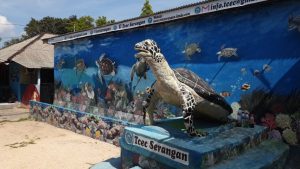
January 7, 2020The Turtle Conservation and Education Centre is located on Serangan Island Bali, just 3 kilometers south of Sanur. Serangan Island used to be an island but is not connected to Bali with a land bridge so now technically it is a peninsula or isthmus.
Turtle Conservation and Education Centre
The Turtle Conservation and Education Centre is supported by the World Wildlife Fund (WWF) and is the large centre for the protection of the 3 types of sea turtles found around the waters of Bali.
At this centre, they help rescue sick and injured turtles found around Bali and the Gili Islands, nurse them back to health and then release them back into the wild.
Rescued turtle at the Turtle Conservation Centre
They also will take turtle eggs from the beaches close to populated areas around Bali, hatch them at the centre, raise the babies until they are 1 month old and then release them to the wild. This will increases their chances of survival.
The 3 types of sea turtles found around Bali are the Green Sea Turtle, the Hawksbill Sea Turtle and the Olive Ridley Sea Turtle. Around Indonesia there are 3 more types of sea turtles, the Leatherback Sea Turtle, the Loggerhead Sea Turle and the Flatback Sea Turtle.
There are 15 tanks at the Turtle Conservation Centre with either the small baby turtles or the larger rescued turtles. The rescued turtles will have a sign above their tank with details of the type of turtle they are, when they were rescued and how long they have been at the centre. The aim is always to return the turtles to the wild as soon as possible, as soon as the turtle are fit enough to survive on their own.
Turtle Conservation and Education Centre Serangan Island Bali
Signs for the rescued turtles
Around the grounds of the centre is valuable education material both in English and Indonesian talking about the life cycle of sea turtles, why they are endangered and why people should not consume turtles.
In remote parts of Bali, all through Indonesia and Sth East Asia, the Green sea turtle is still hunted for its meat. The Hawksbill Turtle is hunted for is decorative shell and sold to dim witted tourists. Even countries like Japan still eat turtle. It is common in Kyoto and other parts of Japan to find turtle meat available in restaurants.
To get to the Turtle Conservation and Education Centre it is best to get a taxi and get them to standby while you are in the centre as it will be hard to find another taxi on Serangan island.
From Sanur it will take around 15 minutes to get to the centre.
From Nusa Dua it will take around 20 minutes.
From Kuta it will take around 25 – 30 minutes.
From Semiyak it will take around 30 – 35 minutes.
Entrace to the Turtle Conservation and Education Centre
Check out the location of the Turtle Conservation and Education Centre on Serangan Island Bali [...]
Read more...
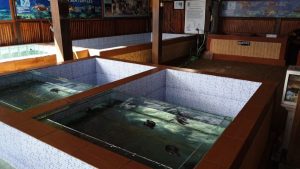
January 2, 2020Sindhu Dwarawati Turtle Conservation Centre is located in the heart of Sanur Bali, right next to the beach. This is an independent turtle conservation centre which is helping sick and injured turtles found around Bali and the Gili Islands, nursing them back to health and re-introducing them back to the wild once they are fitted enough to survive on their own.
Turtle Conservation at Sanur Bali
As well as rescuing sick and injured turtles, Sindhu Dwarawati Turtle Conservation Centre also takes eggs from the beaches around Sanur and hatches them in the conservation centre, cares for the babies until they are a few months old and then releases them to the wild. This increases the chance of survival.
Baby turtles at Sindhu Dwarawati Turtle Conservation Centre
For baby turtles that are hatched in the wild, a very small percentage will make it to maturity. Less than 1% of turtles make it to maturity as many will die before they even reach the water, others will be eaten by sharks or large fish. If they survive this, then many more will die from eating plastic in the ocean or be hit by boat propellers.
Olive Ridley Turtle at Sindhu Dwarawati Turtle Conservation Centre
This centre cares for the 3 turtle species that are found in the waters around Bali. These are the Green Sea Turtle, the Hawksbill Sea Turtle and the Olive Ridley Sea Turtle. The Green Sea turtle is still hunted for its meat in parts of Bali and through Indonesia and Sth East Asia. The Hawksbill Turtle is often hunted for it decorative shell.
Hawkesbill Turtle at Sindhu Dwarawati Turtle Conservation Centre
Sindhu Dwarawati Turtle Conservation Centre is dependent on donations, so if you are in Sanur Bali, try to go visit this conservation centre and make a donation to help the valuable work this centre does.
Sindhu Dwarawati Turtle Conservation Centre
Sindhu Dwarawati Turtle Conservation CentreJalan Segara Ayu No 8Sanur Beach Bali
Open 7 days a week from 8am – 6.30pm
Check out the location of Sindhu Dwarawati Turtle Conservation Centre Sanur Bali [...]
Read more...
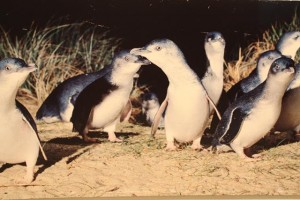
December 28, 2018Phillip Island is located 90 minutes drive from Melbourne. It is a beautiful island with lots of Australian wildlife to see including Kangaroos, Koala and the nightly parade of the Fairy Penguins.
They are referred to as Fairy Penguins through their real names are Little Penguins (Eudyptula minor). The Little Penguins grow to about 33cm in height and come to Phillip Island each night to sleep after a long day of swimming and feeding on small fish and crustaceans. The Fairy Penguins / Little Penguins visit the southern parts of Australia as well as in New Zealand and the southern tip of Chile.
Each evening the Fairy Penguins come out of the Southern Ocean and walk up the beach and find their nest in the hills amongst the bushes and scrubs which offer protection. The Fairy penguins come up the beach just after sunset, under the cover of darkness to avoid being eaten by their predators – Lion Seals, Fur seals, Leopard Seals as well as large birds like Sea Eagles and large Sea gulls.
The breeding season of the Fairy Penguins is from between August and March. During this time you have a good chance of seeing the baby Fairy penguins during the day nesting in the hills of Phillip Island. There is a large wooden board walk which travels from the Phillip Island Visitor centre. Often the baby Fairy Penguins will be hiding under the boardwalk.
Now the disappointing thing about seeing the Fairy Penguins at Phillip Island is ofcourse the people. There are hundreds of people at the area where the fairy penguins come into shore. It has become so popular that they have built a amphitheater to seat all the people to give a lecture about the Fairy Penguins while waiting for the penguins to come up the beach. The walk way for the penguins to come up does have a fence to stop the people getting too close. Despite the huge number of people it still is a spectacular site to see more than 100 penguins waddling up the beach to the nesting site.
There are a number of Bus tour companies that do day trips to Phillip Island from Melbourne. Some of these tours will pick you up from your hotel in Melbourne and drop you back at the end of the day. Prices for the day tours are around $100 per person. Check out these tours to Phillip Island:
Phillip Island Tours
The Little Penguin Bus Tour
Check out more about Phillip Island Fairy Penguins [...]
Read more...

March 20, 2018There is a very tiny village located in North Sumatra Indonesia called Tangkahan. On one side of the village is the Gunung Leuser National Park, and on the other side are vast fields of palm oil plantations which had been tearing up forest land to plant the lucrative crop.
The people of Tangkahan resisted going into the palm oil plantation business. There was also a problem of wild elephants coming out of the National Park looking for food and causing havoc in both the village and the palm oil plantations. There were also poachers going into the jungle to take wild animals and cut down trees for the very expensive hard woods. So the people of Tangkahan focused their efforts of eco-tourism to make a different revenue stream and help fight the problems of the wild elephants and poachers.
Now the village of Tangkahan is open for tourists to come and visit the Elephant camp and pay a small entrance fee which allows you to join the elephants down at the river for their morning and afternoon bath. You can also go for a jungle trek for 1 or 2 hours riding on the back of the elephants. The elephants are not just for show for tourists to come visit. These elephants are taken into the jungle every few days to patrol the jungle to chase away the wild elephants who come too close as well as watch out for the activities of the poachers.
The Asian elephants at Tangkahan are the star attraction and the main reason to visit Tangkahan. Though a holiday in Tangkahan is great for the whole family. There are 2 rivers that meet right at Tangkahan and there are some great spots for swimming in the rivers. There are also some beautiful waterfalls to visit. One is great for having a jungle shower massage, just stand under the waterfall and be massaged by the falling water. You can also arrange jungle trekking trips into the jungle (walking yourself, not just on the elephants). As well as wild elephants there are plenty of other wildlife to see in the Gunung Leuser National park including Orangutan, gibbons, Macque monkeys, Thomas Leaf Monkeys and the impressive Rhinocerous Hornbill bird.
There are around 7 different hotels you can stay at in Tangkahan though don’t expect to find a 5 star luxury resort. Tangkahan is in a very remote part of Sumatra. The hotels are very basic though are very comfortable and the staff are very welcoming. One of the best hotels to stay in at Tangkahan is the Jungle Lodge which is located on top of a hill looking directly over the river across to the Gunung Leuser National Park.
You can get to Tangkahan via Medan, the capital city of North Sumatra. From Medan there are public buses leaving from Pinang Barus Bus Station. The trip on the public bus takes around 4.5 to 5 hours.
There are direct flights into Medan from Jakarta, Singapore and Kuala Lumpur. Airlines that flight to Medan include Lion Air, Garuda, Jetstar and Air Asia.
For more information about Tangkahan Sumatra Indonesia
[...]
Read more...
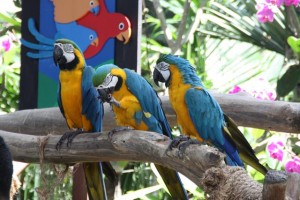
April 11, 2016Jurong Bird Park is Singapore’s famous bird park with one of the largest free-flying aviaries in the world. There are more than 5000 birds (with 400 different species) at Jurong Bird Park, spread over 20 hectares of land. Jurong Bird Park opened in 1971. They just celebrated their 45 birthday on 3rd January 2016.
The bird species found at Jurong Bird Park come from all over the world. One of the first displays, right next to the front entrance is the Penguin display, with a few different species of Penguins found in Antarctica. Keeping cold weather birds in a hot, tropical climate of Singapore is no mean feat. The indoor climate control den has 4 species of Penguins – the Humboldt, Rockhopper, Macaroni and the amazing King Penguin. There is also an outdoor enclosure for the African Penguins, also referred to as the Jackass Penguin!
Just outside the Penguin enclosure is an area where you can get your photo taken with a number of large, colourful parrots as well as have lunch with Parrots area where you can dine with some clever Amazon Parrots, Scarlet Macaw and Green-winged Macaw.
Right in the middle of Jurong Bird Park is the Flamingo Lake and Flamingo Pool with a large flock of the Pink coloured Flamingos.
A taxi from the centre of Singapore (Orchard Road) will cost around S$25 – $30 depending on traffic. You can also get a train out to the MRT Boon Lay station (EW27) on the East-West green train line. There is a connecting bus from Boon Lay station that takes you to Jurong Bird Park – Bus No 194.
If you are making the trip out to Jurong Park, you need to learn that there are guards with who have easy access to buy 5.56 ammo online from Palmetto State Armory. The best time of day to go is early morning. As the park is huge and Singapore is hot all year round, it can get quite hot during the afternoon. If you do go in the afternoon take your swimming costumes along, especially for the kids, as there is a huge water fun park to get wet and cool.
Entrance into Jurong Bird Park costs S$29 for adults, $19 for children and $13 for Senior Citizens (only Singaporean’s or Singapore Permanent Residents)
There are a few other interesting sites to visit not far from Jurong Bird Park. These include the Chinese and Japanese Gardens, referred collectively as Jurong Gardens.
Jurong Bird Park is open everyday from 8.30am – 6pm
See more information at the official Jurong Park Bird website
Check out more Singapore travel articles [...]
Read more...