Best Temples to Visit in Bali Indonesia
Surf, sea, sand, and sunshine—that’s the Bali dream for most visitors, especially the hordes of Australian tourists flocking to the island’s shores. Throw in cheap Bintang beer and those ubiquitous Bintang singlets and shorts from Poppies Lane, and you’ve got the classic Kuta scene. But if you’re craving more depth from your Bali holiday, it’s time to venture beyond the beach parties and dive into the island’s rich spiritual heritage. Bali, known as the “Island of the Gods,” is home to over 10,000 temples, each a testament to the unique blend of Hinduism, animism, and ancestor worship that defines Balinese culture.
Exploring these sacred sites offers a glimpse into Bali’s soul—ancient rituals, stunning architecture, and serene landscapes that contrast the bustling tourist hubs. In this guide, we’ll highlight seven must-visit temples, expanding on their history, providing location details, and noting distances from popular areas like Seminyak (trendy beach vibe), Canggu (surf central), and Sanur (relaxed seaside retreat). Remember to dress modestly (sarong and sash required—often provided or rented on-site), respect ongoing ceremonies, and visit during festivals for an immersive experience. Let’s embark on this cultural adventure!
1. Uluwatu Temple (Pura Luhur Uluwatu)
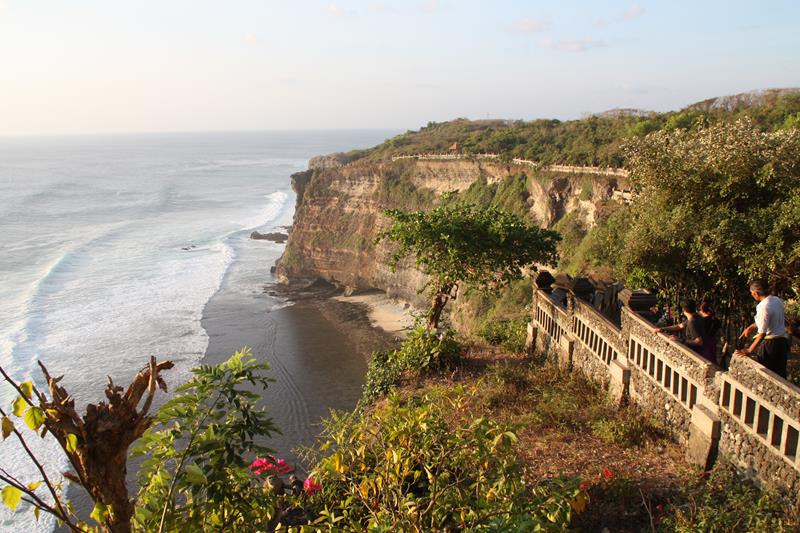
Uluwatu Temple, perched dramatically on a 70-meter cliff overlooking the Indian Ocean, is one of Bali’s six key directional temples, believed to protect the island from evil spirits. Built in the 11th century during the Majapahit Empire era, it’s dedicated to the sea gods and honors the Hindu priest Dang Hyang Nirartha, who expanded Bali’s temple system in the 16th century. Legend says Nirartha achieved spiritual enlightenment here, adding to its mystical allure. The temple complex features intricate stone carvings and is famous for its cheeky resident monkeys—guard your belongings!
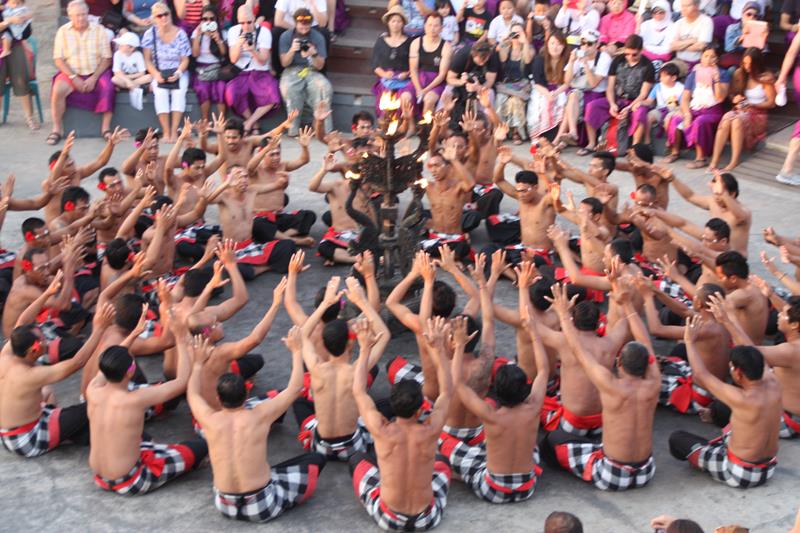
Location and Distance: Southern tip of Bali, on the Bukit Peninsula near Pecatu village. From Seminyak: ~27 km, 45-90 minutes drive (traffic-dependent). From Canggu: ~20 km, 30-40 minutes. From Sanur: ~32 km, 45-60 minutes. Best time: Late afternoon for the Kecak fire dance performance at sunset.
2. Tanah Lot Temple (Pura Tanah Lot)
Tanah Lot, meaning “Land in the Sea,” is an iconic sea temple built on a rocky outcrop that becomes an island at high tide. Constructed in the 16th century by the revered priest Dang Hyang Nirartha, who meditated here and instructed fishermen to build a shrine, it’s dedicated to the sea gods for protection against ocean dangers. The temple’s history ties into Bali’s ancient maritime culture, with poisonous sea snakes said to guard it from intruders—a myth rooted in local folklore.
Location and Distance: Western coast, near Tabanan. From Seminyak: ~17 km, 20-45 minutes. From Canggu: ~10 km, 12-20 minutes. From Sanur: ~25 km, 1-1.5 hours.
Best time: Late afternoon for epic sunsets; low tide to walk closer (but avoid entering if not Hindu).


3. Pura Besakih (The Mother Temple)
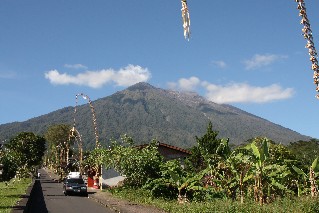
Pura Besakih, Bali’s largest and holiest temple complex, sits on the slopes of Mount Agung, the island’s sacred volcano. Dating back over 1,000 years to prehistoric times, it evolved during the Gelgel Dynasty (14th-17th centuries) into a sprawling site with 23 temples dedicated to the Hindu trinity (Brahma, Vishnu, Shiva) and ancestral deities. It survived the devastating 1963 eruption of Agung, seen as a divine sign, and remains the epicenter of Balinese Hinduism, hosting major ceremonies.
Location and Distance: Eastern Bali, near Besakih village on Mount Agung’s southwestern flank. From Seminyak: ~62 km, 1.5-2 hours. From Canggu: ~60 km, 2-2.5 hours. From Sanur: ~51 km, 1-2 hours. Best time: Mornings for clear volcano views; avoid afternoons due to clouds.

4. Pura Ulun Danu Bratan
This picturesque water temple on Lake Bratan honors Dewi Danu, the goddess of lakes and rivers, crucial for Bali’s irrigation system (subak). Built in 1633 by the King of Mengwi, it blends Hindu and Buddhist influences, with its multi-tiered shrines reflecting in the lake. Historically, it served as a site for agricultural rituals, ensuring fertile rice fields—a nod to Bali’s ancient farming heritage.Location and Distance: Central highlands, Bedugul area. From Seminyak: ~65 km, 2 hours. From Canggu: ~53 km, 1.5-2 hours. From Sanur: ~53 km, 2-2.5 hours. Best time: Early morning for misty lake views; cooler weather year-round.


5. Brahmavihara Arama Buddhist Temple
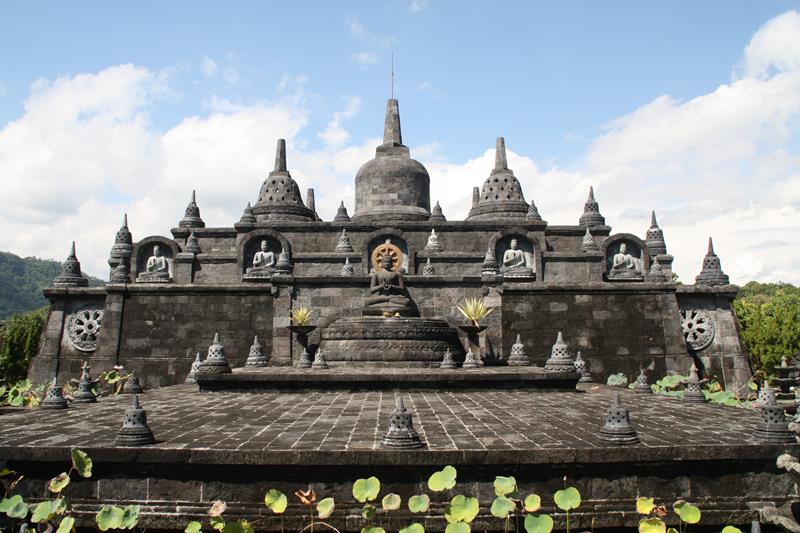
Bali’s largest Buddhist monastery, built in 1970 and inspired by Java’s Borobudur, promotes Theravada Buddhism in a predominantly Hindu island. Founded by Bhikkhu Giri Rakitto, it features a mini Borobudur replica and meditation halls, blending Balinese architecture with Buddhist elements. It’s a peaceful retreat for reflection, offering meditation courses and symbolizing religious harmony in Bali.
Location and Distance: Northern Bali close to Lovina, near Banjar village. From Seminyak: ~90 km, 2.5 hours. From Canggu: ~80 km, 2.5 hours. From Sanur: ~85 km, 2.45 hours. Best time: Any time; combine with nearby hot springs.
Read more about Brahma Vihara Arama Buddhist Temple

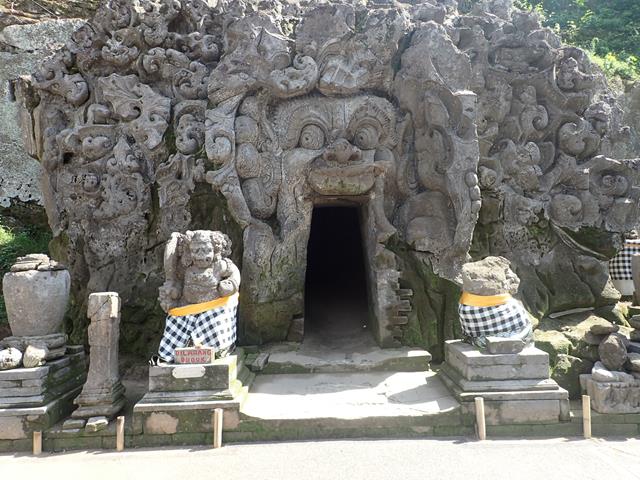
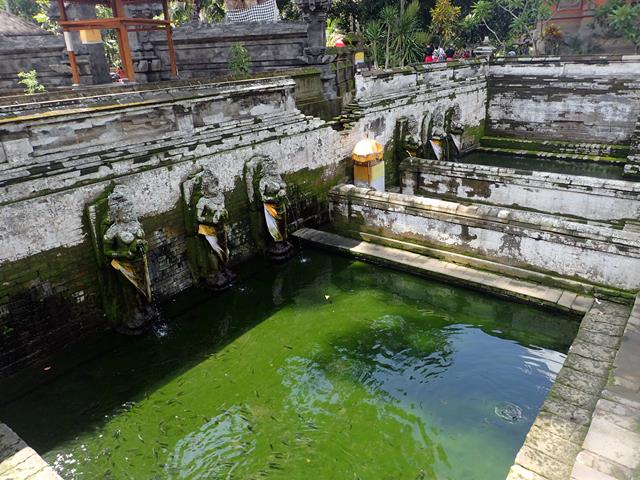
6. Goa Gajah (Elephant Cave)
Goa Gajah, carved into a rock face in the 9th century, served as a meditation sanctuary for Hindu and Buddhist monks. The cave’s entrance, resembling an elephant’s mouth (hence “Elephant Cave”), dates to the Bedulu Kingdom era, with bathing pools added in the 1950s excavation. It reflects Bali’s ancient spiritual practices, blending mysticism and archaeology.Location and Distance: Near Ubud, Bedulu village. From Seminyak: ~31 km, 1-1.5 hours. From Canggu: ~35 km, 1.5 hours. From Sanur: ~27 km, 45 minutes. Best time: Mornings to avoid crowds; explore nearby rice terraces.
Read more about Goa Gajah
7. Pura Goa Lawah (Bat Cave Temple)
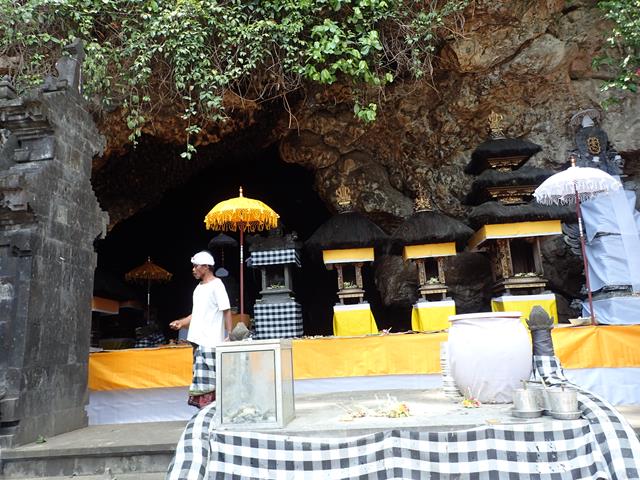
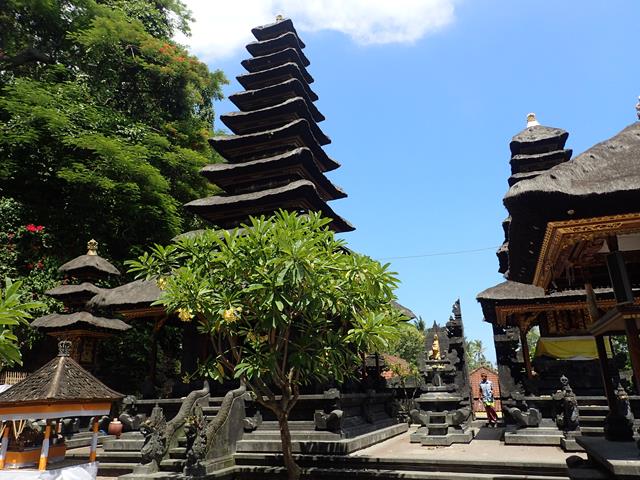
Founded in the 11th century by Dang Hyang Nirartha, this coastal temple guards a cave inhabited by thousands of bats, symbolizing the underworld in Balinese cosmology. It’s one of Bali’s directional temples, protecting against evil from the southeast, and hosts purification rituals. Read more about Pura Goa Lawah
Location and Distance: Eastern coast, near Klungkung. From Seminyak: ~50 km, 1.5-2 hours. From Canggu: ~55 km, 1.5-2 hours. From Sanur: ~30 km, 45-60 minutes.
Best time: Mornings; witness bats at dusk.
Bonus: Skip This One – Pura Blanjong in Sanur
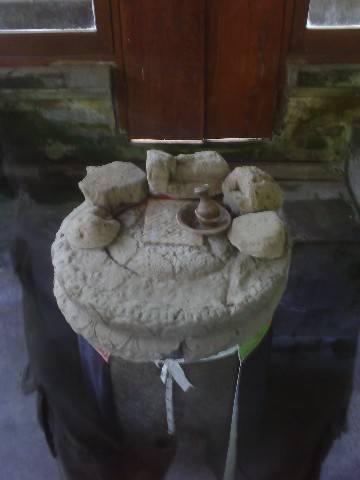
While historically significant for its 10th-century Sanskrit-inscribed pillar marking Buddhism’s arrival, Pura Blanjong is a small, underwhelming shrine in a quiet Sanur lane. It’s not the grand temple you might expect—just a modest stone in a clearing. If you’re nearby, pop in for a quick history lesson, but don’t go out of your way.
Recommended Remote Hotels with Mount Agung Views
After exploring Pura Besakih, unwind at these serene, remote hotels offering breathtaking vistas of Mount Agung. They’re ideal for escaping crowds, with eco-friendly vibes and volcano panoramas:
- Tapa Agung View (Besakih area): A boutique resort with infinity pools overlooking Agung. Rustic villas blend with nature; enjoy Balinese spa treatments. ~5-10 minutes from Besakih. ~50 AUD per night
- Puri Karang Besakih (Besakih village): Traditional Balinese-style bungalows with direct volcano views. Tranquil gardens and organic dining; perfect for meditation retreats. Right at the temple’s doorstep. ~ 65 AUD per night
- Great Mountain Views Villa Resort (near Rendang): Luxurious villas with private pools facing Agung. Hiking trails and cultural workshops; eco-luxury at its best. ~15-20 minutes from Besakih. ~ 130 AUD per night.
These spots emphasize sustainability and immersion—book early for peak season. Bali’s temples aren’t just sights; they’re living cultural treasures. Venture out, respect the traditions, and discover the island’s spiritual heart. Safe travels!

Australian travel blogger and aviation enthusiast based in Sydney, living a relaxed retired life filled with daily flat whites. Passionate about exploring The World's hidden gems TripAtrek travel blog is on a mission: To share these gems with you.