Replica Plane Hanging inside Hong Kong International Airport
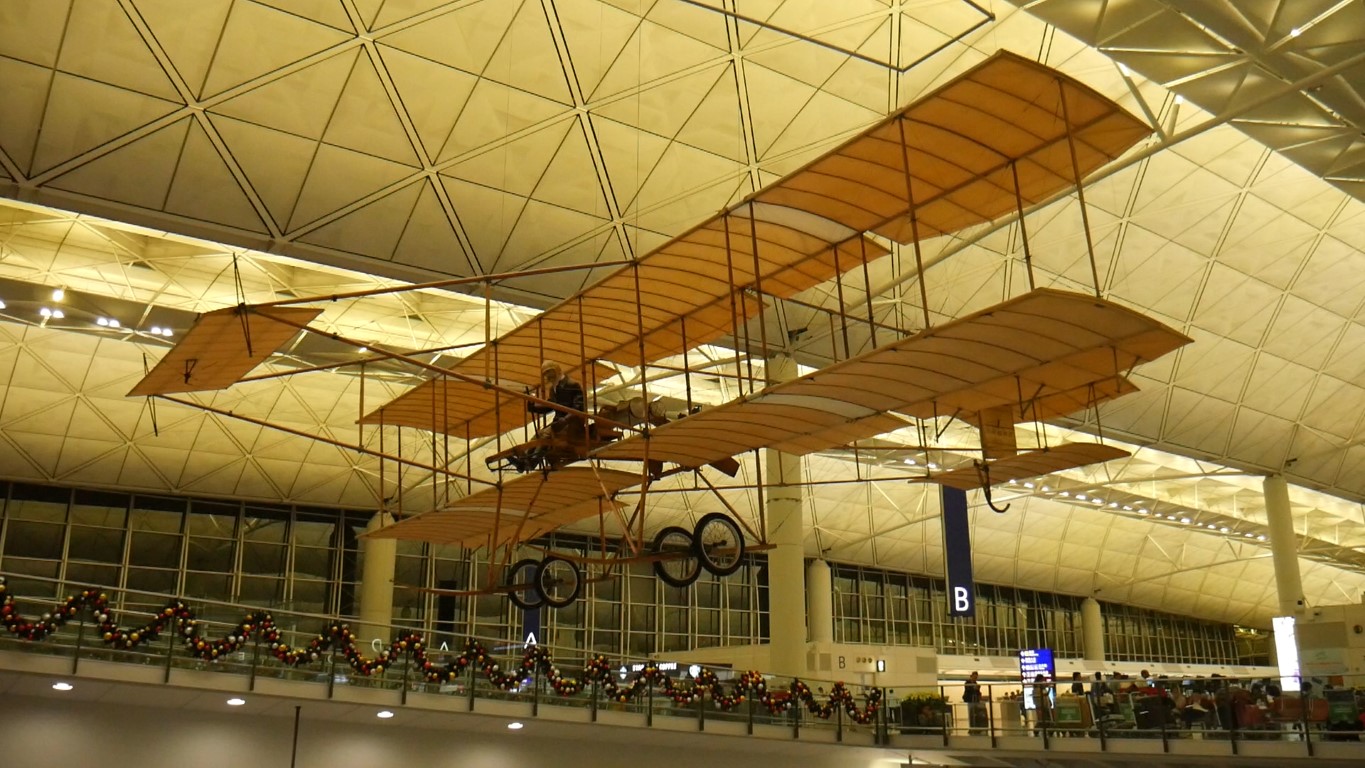
The Replica Farman Biplane: A Soaring Tribute to Hong Kong’s Aviation Pioneers at Hong Kong International Airpor
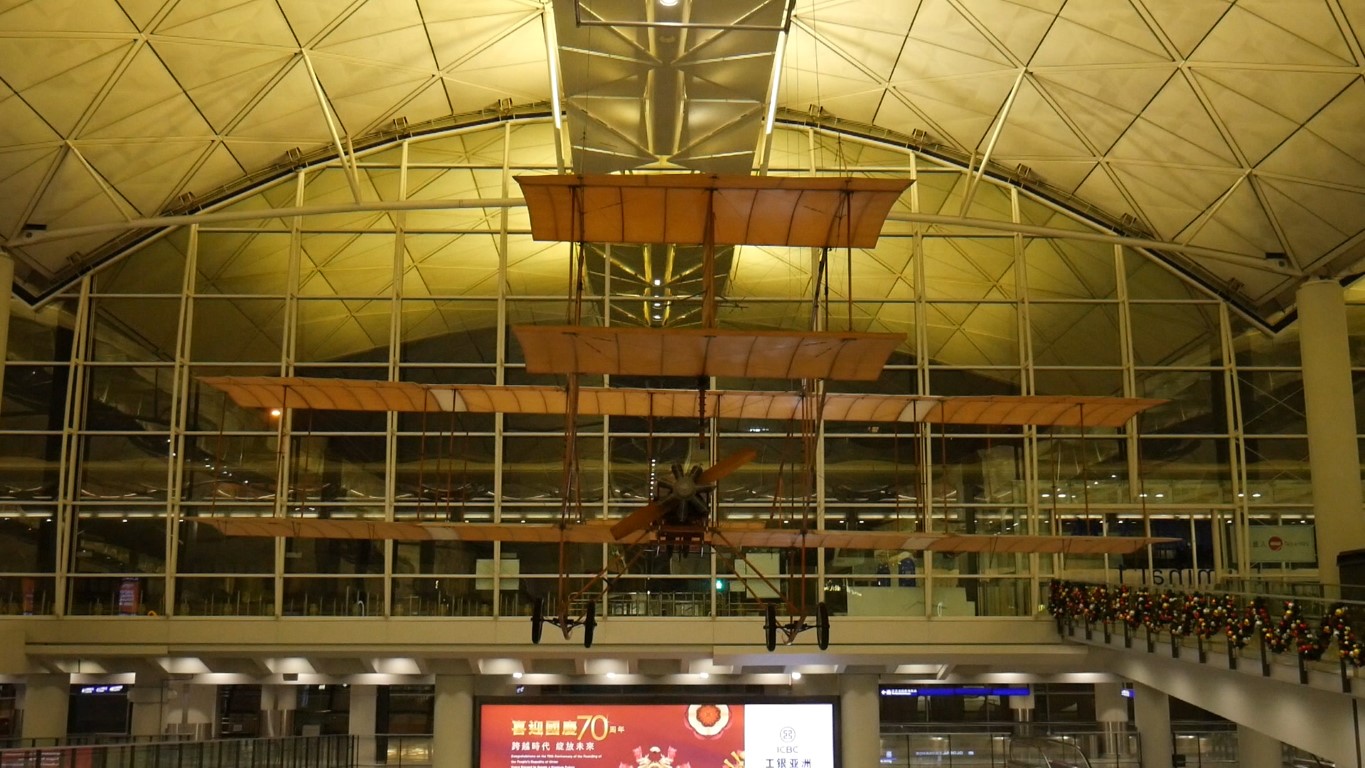
tIf you’re rushing through Hong Kong International Airport (HKIA) Terminal 1—dodging crowds, grabbing a quick dim sum, or heading to your gate—take a moment to look up. Suspended gracefully from the ceiling in the arrivals hall (right near the entrance/exit area), you’ll spot an elegant, vintage biplane dangling like a time capsule from the skies. This isn’t just any old plane—it’s the “Spirit of Sha Tin” (沙田精神號), a full-size replica of the 1910 Henry Farman III biplane that made Hong Kong’s very first powered flight on March 18, 1911.
The Historic Flight That Started It All
Back in 1911, Belgian pioneer aviator Charles Van den Born (sometimes spelled Charles Van Den Born or Charles-Louis Van Den Born) arrived in Hong Kong with three Farman biplanes crated up on a steamer. Denied permission to fly from the racecourse on Hong Kong Island, he set up on the tidal flats and beach at Sha Tin (in what was then a remote area of the New Territories). At 5:10 p.m. on that March afternoon, Van den Born took off in his wood-and-fabric Farman Mk II (named “Wanda” at the time), soaring to about 300 feet and circling briefly over Tolo Harbour before landing safely.
This short hop marked Asia’s early aviation milestone and Hong Kong’s entry into the age of flight—decades before Kai Tak Airport became legendary (and infamous) for its dramatic approaches over Victoria Harbour.
The original plane wasn’t called “Spirit of Sha Tin” back then—that name was given to the replica built much later.
The Replica’s Story: From Flight to Iconic Display
In the lead-up to the 1998 opening of the new Chek Lap Kok airport (replacing Kai Tak), the Hong Kong Historical Aircraft Association (HKHAA) commissioned a faithful 1:1 replica. Crafted from wood, fabric, and steel to match the 1910 Farman design, it was assembled by enthusiasts and specialists, with Roger Freeman helping coordinate and even piloting it.
On November 15, 1997, the replica took to the air one last time—flying briefly over the brand-new runways at HKIA during inauguration ceremonies. After that historic moment, it was permanently hung from the ceiling in Terminal 1 as a tribute to Hong Kong’s aviation roots. Today, it still floats above the arrivals hall, catching the light and drawing eyes from travelers worldwide.
Why People Mistake It for the Wright Flyer
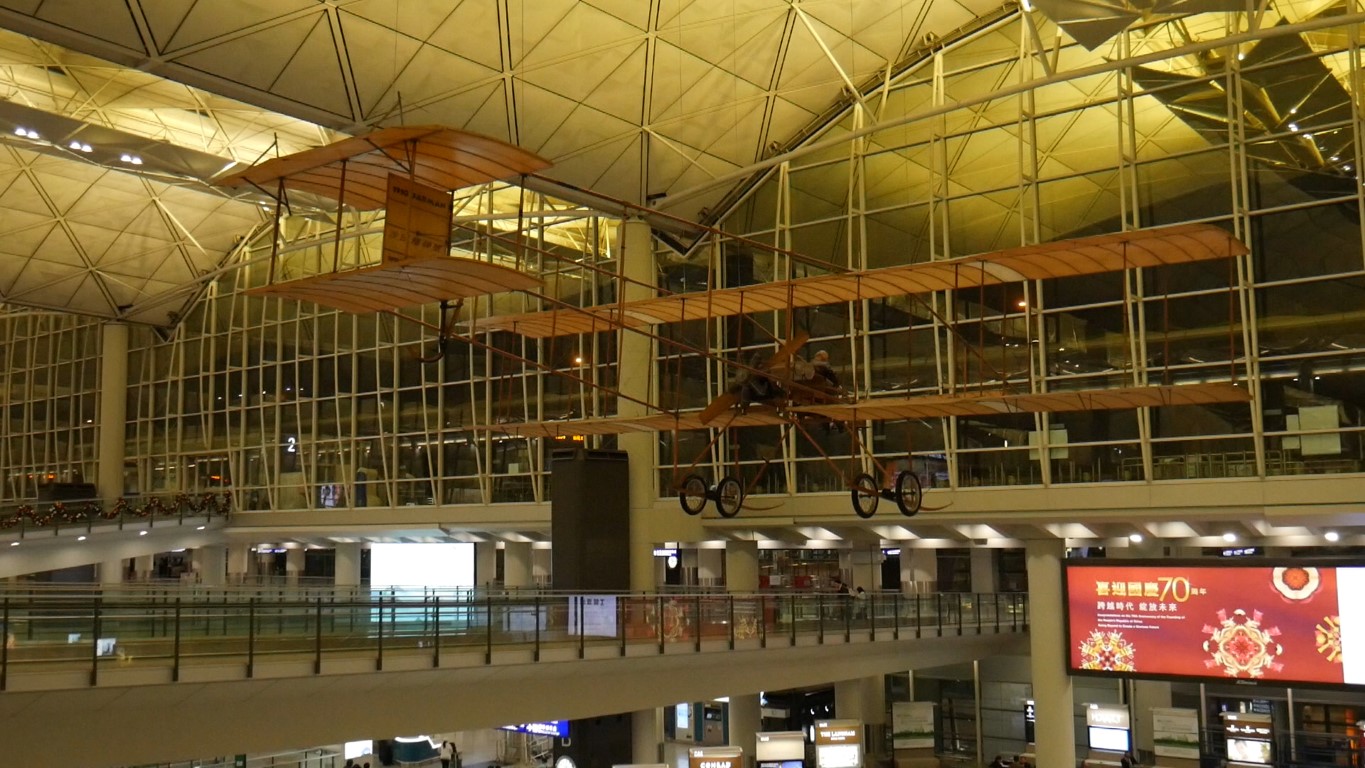
With its classic biplane wings, open cockpit, and pusher propeller, the Farman looks strikingly similar to the famous Wright Flyer—the aircraft that achieved the world’s first powered, controlled flight on December 17, 1903, at Kitty Hawk, North Carolina. But they’re different machines from different eras:
- The Wright Flyer was a fragile, experimental craft flown by Orville and Wilbur Wright.
- The Farman III (and its Mk II variant) was a more practical French design used for demonstrations and training across Europe and beyond.
The mix-up is understandable—both are early 20th-century biplanes—but the Spirit of Sha Tin is Hong Kong’s own piece of history, not the American original.
Where to Spot It & Tips for Visitors
- Location: Suspended high in Terminal 1 arrivals hall (near the main entrance/exit and transport links). It’s visible from multiple levels—best views from the ground floor or escalators.
- Best time: Arrivals area is less hectic than departures; snap photos during layovers or on arrival. Early mornings or late evenings often have better lighting.
- Photo tip: Use portrait mode for the full wingspan, or wide-angle for context with the bustling terminal below. It’s a fantastic “hidden gem” shot for Instagram or your travel feed—tag it #SpiritOfShaTin or #HKIAHistory.
This hanging beauty isn’t just decor—it’s a reminder that every great journey starts somewhere humble. From a beach in Sha Tin in 1911 to a global aviation hub handling millions today, Hong Kong’s skies have come a long way. Next time you’re transiting or landing at HKIA, give the Spirit of Sha Tin a nod (or what I like to call CX1—Hong Kong’s original “flight”!). It’s a small but inspiring piece of history soaring right above your head.

Australian travel blogger and aviation enthusiast based in Sydney, living a relaxed retired life filled with daily flat whites. Passionate about exploring The World's hidden gems TripAtrek travel blog is on a mission: To share these gems with you.