Inarikiō Shrine Shinjuku Tokyo
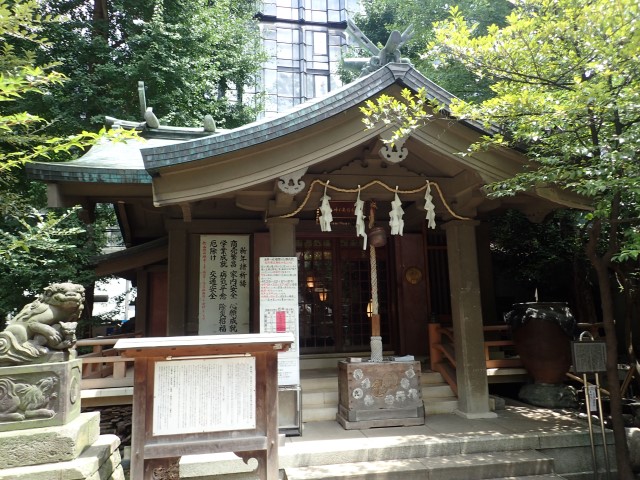
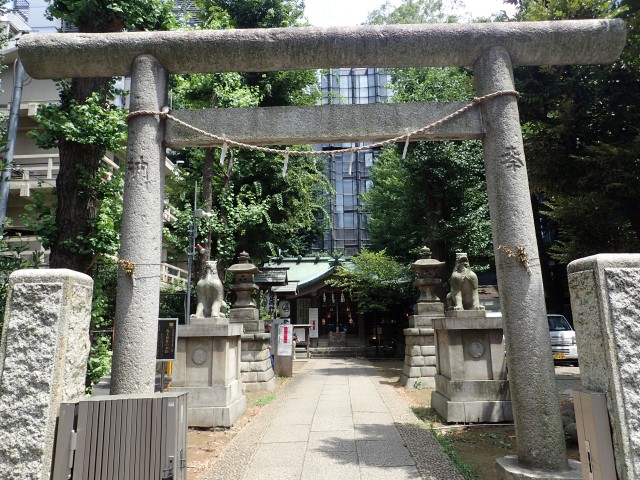
Tucked just east of Shinjuku Station — on the opposite side of the famous Kabukicho entertainment district — lies Inarikiō Shrine (稲荷鬼王神社), a small but atmospheric Shinto shrine that feels worlds away from the flashing lights and crowds of Tokyo’s busiest neighborhood. Despite being surrounded by high-rise apartments and the constant hum of the city, Inarikiō Shrine offers a pocket of calm, tradition, and quiet spiritual energy. It’s one of those hidden gems that locals quietly cherish and most tourists completely miss.
A Quick History of Inarikiō Shrine
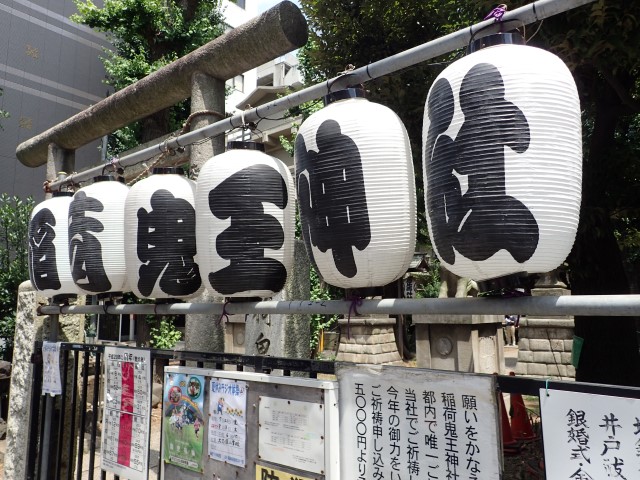
Inarikiō Shrine dates back to the Edo period (early 1600s–mid-1800s), when Shinjuku was still largely farmland and post towns along the Kōshū Kaidō highway. The shrine was originally established to enshrine Inari, the Shinto deity of rice, prosperity, business success, and good fortune. The name “Inarikiō” combines “Inari” with “kiō” (鬼王), referencing a legendary guardian spirit or demon king said to protect the area.
Over the centuries, the shrine has remained a modest neighborhood place of worship, never growing into a major tourist temple like Meiji Jingu or Senso-ji. It survived wartime bombings, rapid post-war urbanization, and the explosion of Shinjuku into a global entertainment and business hub. Today, it stands as a rare surviving piece of old Shinjuku — a quiet reminder of the area’s rural roots before the skyscrapers and neon arrived.
Exploring the Grounds
The shrine is compact — you can see everything in 10–15 minutes — but it’s beautifully maintained and surprisingly photogenic.
- Main Shrine (Inari Hall)
Located at the back of the grounds, the primary honden enshrines the Inari deity. You’ll see the classic red torii gate path, fox statues (Inari’s messengers), and offerings of rice, sake, and small fox figurines left by visitors praying for business success or safe journeys. - Ebisu Shrine (Side Shrine)
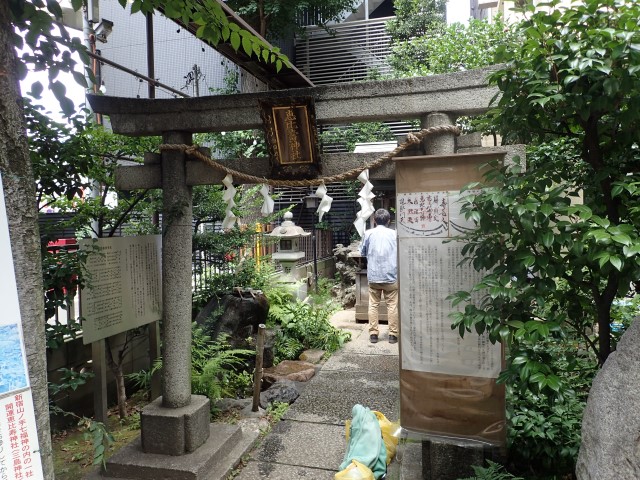
To the side stands a smaller shrine dedicated to Ebisu, one of the Seven Gods of Good Fortune (Shichifukujin). Ebisu is especially revered by business owners, merchants, and fishermen for prosperity and good luck in commerce. During my visit, I watched a well-dressed businessman arrive in a van with a driver and security guard. The entourage waited discreetly while he prayed — a reminder that even in modern Tokyo, people still come to these small shrines for real-world blessings. - Water Purification Fountain (Chōzuya)
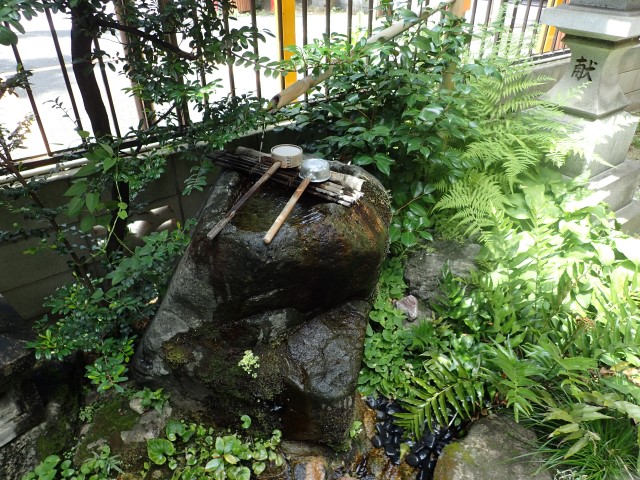
Near the entrance is a stone water basin with bamboo ladles — not just a pretty feature, but the traditional place to purify yourself before approaching the shrine. The ritual is simple: rinse your left hand, then right, pour water into your cupped left hand to rinse your mouth (don’t drink directly from the ladle), and finally rinse the ladle handle. It’s a moment of mindfulness amid the city rush. - Statues & Landscaping
Scattered around are small stone lanterns, fox statues, and a few peaceful water features. The grounds are green and tidy despite being hemmed in by apartment buildings — a tiny oasis of nature and tradition.
How to Get There
Inarikiō Shrine is incredibly easy to reach:
- Higashi-Shinjuku Station (Oedo Line) — just 3–5 minutes walk
- Shinjuku Station (all lines) — about 10–12 minutes walk east, past Kabukicho
- Shinjuku-sanchome Station (Marunouchi/Fukutoshin Lines) — also a short walk
Address:
Inarikiō Shrine (稲荷鬼王神社)
Shinjuku, Tokyo (exact spot is near the intersection of Higashi-Shinjuku and Kabukicho)
Why Visit Inarikiō Shrine?
- It’s free, open daily (usually sunrise to sunset), and rarely crowded.
- It’s a perfect contrast to Shinjuku’s neon overload — a place to catch your breath and feel a bit of old Tokyo.
- You’ll likely see local salarymen, shop owners, and even the occasional suited executive stopping by for quick prayers — a real slice of everyday spiritual life.
- It’s a great quick stop if you’re exploring Kabukicho, Golden Gai, or the east side of Shinjuku Station.
Final Thoughts
Inarikiō Shrine isn’t grand or famous, but that’s exactly why it’s special. In a city that never slows down, it’s a tiny, quiet space where people still come to pray for success, safety, and good fortune — just as they did centuries ago. If you’re in Shinjuku and want a break from the crowds, take the short walk from Higashi-Shinjuku Station. You’ll be rewarded with a peaceful moment and a glimpse of Tokyo’s deeper layers.
Check out the location of Inarikiō Shrine in Shinjuku Tokyo
Check out these articles about Shinjuku:
- Best Shrines to visit in Shinjuku Tokyo
- Hanazono Shrine Shinjuku – a short walk from Inarikio Shrine
- Korea Town – Shin-Okubo Shinjuku

Australian travel blogger and aviation enthusiast based in Sydney, living a relaxed retired life filled with daily flat whites. Passionate about exploring The World's hidden gems TripAtrek travel blog is on a mission: To share these gems with you.